ALIII vs. NTP: Two proposals for the all-IP transition
The world needs voice communication to run over IP networks—but the legacy of TDM and SS7 from the 1970s lingers on. Bad actors are exploiting these limitations to break laws and commit fraud.
By Mark Lindsey
Pindrop, a voice security firm, published a Voice Intelligence & Security Report estimating that contact centers lost $12.5 billion in 2024 due to spoofed caller ID and related fraud.
Why This Matters—and Why Now
This has been a problem for years, so why do changes in interconnection in the North American telecommunications network matter—and why right now? Because policymakers are treating the transition as a national priority: the FCC is pushing toward a deadline of December 31, 2028, to effectively end the current regime. Every organization in the US voice telecom network—passing calls between different carriers or running a business that depends on that traffic—should expect the ground rules to change.
The cost structure for TDM has also become untenable. According to testimony at the July 2026 FCC Workshop on IP Interconnection, there are cases where a single network link used for sending phone calls once cost $300 a month and now costs $46,000 a month.
Worse, these old systems render parts of the current telecom network an inadvertent accomplice to fraud. Fraudsters are using technical debt to hide their activity in the US telecom network today; the concealment is enabled by the current technology and the current set of rules. Once we transition to all-IP, we will have much better tools for detecting fraudulent activity, because we will be able to use and add new data elements to the call signaling to help us authenticate and track calls.
Non-IP Versus All-IP Call Paths
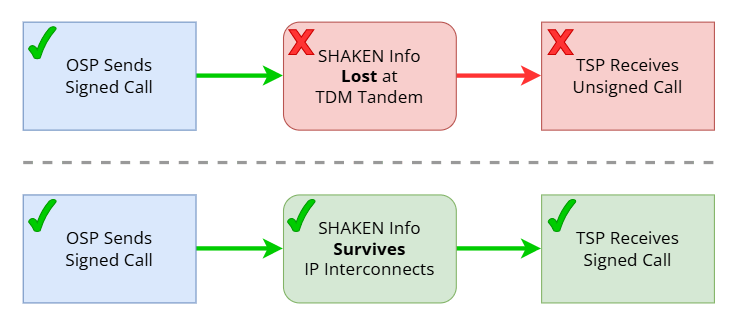
Figure 1. STIR/SHAKEN information is lost at TDM segments but survives IP interconnections
Figure 1 illustrates that legacy TDM tandems do not use out-of-band SHAKEN and drop any call authentication information they receive. Many calls have at least one hop through a TDM provider, leading to loss of crucial information for restoring trust in the telephone network.
A lot of progress has already been made using STIR/SHAKEN and enforcement—detecting the bad actors, knowing where they’re coming into the network, how they’re sending their traffic, and the types of scams they’re committing. Alex Quilici, CEO of the robocall-defense firm YouMail, credits even the industry’s partial work on IP transition with good progress: “There has been progress, and much of it is driven by enforcement, with that enforcement leveraging tracebacks and STIR/SHAKEN.”
Finally, there is the engineering achievement itself. The basic building blocks of the technology were in place by the late 1990s, but the political and economic machinery has to be modernized. It’s exciting to see it finally coming to pass: Internet Protocol technology displacing legacy systems established in the 1960s and 1970s.
Two Proposals on the Table
There are two active proposals on the table: ALIII (pronounced “allies”) and NTP.
- ALIII, for “Agreement-Less IP Interconnection Over the Internet,” is a set of tech and practices where carriers directly use the internet, discover each other, and route traffic across the internet to one another without any middleman handling the traffic.
- NTP, introduced as National Transit Provider (though I prefer “Nationwide Transit Provider”), is an idea to have one or more large organizations that serve as the IP hub through which traffic can pass and function as a kind of nationwide tandem.
These are the two alternative frameworks, but they may not have to be rivals—in fact, they work best if both proceed together. NTP can be implemented relatively quickly with clear accountability; ALIII brings openness, deregulation, and removes the monopoly concern entirely. Each supplies what the other lacks. (A third concept, not covered here in detail, is to require the existing 1,653 tandem switches in the United States to provide two IP Points-of-Interconnection in each state.)
The Current State of Affairs: SS7/TDM and Bilateral IP Interconnection
Before examining NTP and ALIII, consider the starting point. One basic fact everyone agrees on: we want to move away from the current way things are done to the new IP-based way.
For IP interconnection today, carriers have to set up a bilateral agreement: they must agree on the contract, but also all the tedious details of signaling, network security, connectivity, number formatting, audio codecs, and more. AT&T’s Martin Dolly tells the story of trying to set up the link to exchange VoIP traffic between Verizon and AT&T, and it took months to work out the details for that one link.
Having worked in this industry, I find that unsurprising. In fact, two months to schedule calls and do troubleshooting is fast, simply because humans are busy. It takes a lot of time to settle even details like exactly what the SIP headers are supposed to look like, as well as security choices—IPsec versus TLS—where there are a lot of variations and details that are possible. And that’s a bilateral interconnection for VoIP traffic; it can go across the internet, or across a private Ethernet link using IP but bypassing the public Internet routing table. (Making all those decisions once, in a single profile, is precisely what ALIII intends to do.)
Most individual interconnection trunks are set up over TDM today, using DS1 (1.544 Mbps) and DS3 (45 Mbps) synchronous links for audio and controlling the call using SS7/ISUP. Richard Shockey, the chair of the SIP Forum, has highlighted that SS7 endures in part because of rules from NECA—the National Exchange Carrier Association, an FCC-created tariff-filing and revenue-pooling association that files interstate access tariffs on behalf of many small rural ILECs (incumbent carriers) and handles billing processes for many American carriers and service providers. Those rules mean you must have some SS7 connectivity to qualify as a service provider within their regime—and many service providers want that status for the access to rates and billing that NECA provides. So, the billing system created in 1983 tends to keep SS7 alive today.
Beyond TDM/SS7 interconnection, many carriers use privately negotiated IP interconnects, like the one between AT&T and Verizon. A striking fact about the traffic volume is that, even with just a handful of IP interconnects today, done largely manually, with manual setup of IPsec tunnels in many cases, SBCs configured, and call routing set up between two carriers—covers 80% of U.S. voice traffic. Most of it is calls between the major mobile carriers, plus a few others as well.
A classic TDM interconnection looks like this: two switches connected by DS1s or DS3s, each switch with a point code, and each side with SS7 A links up to an STP—a signaling transfer point. They configure routing rules so that each end of the link can decide when to use that link. For example, Carrier A may have a link to Carrier B, and every call going to a telephone number beginning with “229-316-0” would route across that link. That’s the current—and dated—state of the art: it has existed, in some form, since the 1970s, and has been largely standardized since the 1980s.
Everyone wants to get off those TDM links. Due to rule changes, the costs for the transport part—the DS1 or the DS3—have risen dramatically. They’re now treated as scarce legacy circuits, and companies are having to pay huge fees. Sticker shock accounts abound—the DS3 increase cited earlier among them. What gets genuinely dangerous is when those links are necessary for connecting to legacy 911 services, so that you truly must keep that access to keep the connectivity. (911 is largely beyond the scope of this article.)
So the state of the art: a handful of IP interconnects; interconnection and bilateral agreements done over SS7/TDM; and IP connectivity to carriers like Sinch and Bandwidth—which is not really considered interconnection, because it is not fulfilling the same jobs that interconnection was built to do.
Commercial Wholesale SIP: What Bandwidth and Inteliquent Are Already Doing
We need to distinguish between regulated interconnection and commercial origination-termination. In regulated interconnection, we have Section 251 and 252 duties: the responsibility of parties to negotiate, the arbitration process when there are disputes, the establishment of state commission approvals, compensation agreements, and defined points of interconnection (POI). And there’s accountability that goes along with that: both sides have to keep their part of the network running. That’s much of what interconnection is about, and it’s categorically different from buying a wholesale SIP connection from a company like Bandwidth or Sinch, where the service is simply origination and termination of traffic. In that case, you might use the public internet or private Ethernet—but you don’t have any of the regulated obligations under 47 U.S. Code Sections 251 and 252.
There’s far more than transport aggregation involved in the existing ILEC (incumbent LEC) obligations. Any future framework must make sure the function that is obligated today is addressed in the future state. Sometimes the friction of existing systems provides true value and should at least point to the questions that need to be answered. (See my recent article on how this applies to SS7/TDM and the transition to IP: “The Friction Was The Firewall.”)
What Bandwidth and Inteliquent/Sinch do is maintain connectivity to tandems or to local carriers and use it to get access to numbers (origination) and to deliver calls into the network (termination), including to telecom switches that don’t have IP connectivity. Customers can go to Sinch or Bandwidth and buy origination—the ability to order a phone number in a given city from that city’s incumbent operator—and that carrier will route the call to Sinch or Bandwidth over an interconnection link that is today primarily TDM. Sinch has a legacy of connectivity, especially into the 1,653 tandems around the country—the central switching points that connect those legacy carriers.
In addition, Bandwidth, Inteliquent, and others do termination: a carrier connects over Internet Protocol—VoIP—from its local switch or Metaswitch or BroadWorks platform or NetSapiens platform or CS2K or Ribbon or any comparable platform and sends those calls to the IP termination provider across the IP link. Again, that’s not really considered IP interconnection—an important point to understand.
So, you’ve got organizations like Bandwidth, Inteliquent, and others that already have the technical ability to connect to individual carriers, and the ability to exchange traffic between them over all IP. You can connect to Bandwidth, somebody else can connect to Bandwidth, and you can send traffic to each other, IP end-to-end. It’s VoIP, so you get all the STIR/SHAKEN headers. You get anything custom you need. If you need high-definition audio like AMR-WB, you can, in principle, pass it through any of these nationwide providers connecting the two ends. They’re already up and running, and they carry real advantages.
They continue to operate because of all these legacy rules—the NECA eligibility chain among them—and other question marks around interconnection. They’re still operating over TDM connections today, and a lot of the carriers they connect to are not eager to move over to IP easily, or at least they know there’s a lot of work to be done. The honest summary: there’s a lot of work to move traffic from TDM over to a new IP interconnection. You could say these are the nationwide transit providers—NTPs. These networks already exist today.
The Background of ALIII
What if the carriers could connect directly to each other? What if carriers who use IP could use a database to find how to route calls to the destination, and use their quality Internet links to send the call? ALIII is born of that idea: it stands for Agreement-Less IP Interconnection Over the Internet. It’s backed by USTelecom, along with the carriers Verizon, AT&T, and Lumen (formerly CenturyLink).
With ALIII, the concept is that we could all opt into a single, shared agreement—carrier A operates with one agreement, carrier B operates with the same agreement, carrier C with the same. All agree to send traffic to each other. Then A and B don’t need a separate agreement, A and C don’t need an agreement, and B and C don’t need an agreement. There is only one big agreement, in which all have agreed to a single set of rules—a common license, you could call it. Like getting a driver’s license: you all agree to follow the same driving rules. And you can then send traffic to each other directly through a discovery mechanism.
A few of the technical specs: ALIII requires IPv6—meaning you can use IPv4 in the internals of your network, but when you’re exchanging traffic with other ALIII operators, you’re going to use IPv6. It uses TLS 1.3, which specifies a modern encryption suite and, potentially, quantum-safe cryptography as well. It uses Secure RTP, so the audio sent across the network is encrypted, and if it’s recorded, it should be difficult to decode even later. That’s the goal.
ALIII: Agreement-Less IP Interconnection over the Internet
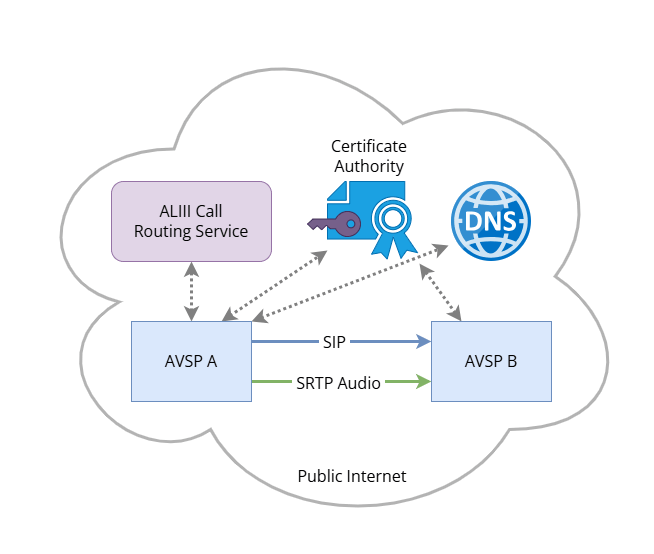
Figure 2. ALIII Uses the Public Internet
In Figure 2, Carrier A and Carrier B are “Approved Voice Service Providers” (AVSPs). They use the ALIII Call Routing Service to map telephone numbers to the domain names. DNS is then used to discover the IP addresses to which traffic is sent. SIP/TLS and SRTP are used to provide secure signaling and media.
ALIII will give you a way to send traffic between different carriers across the public internet. This is technically possible today—but it’s phenomenally risky, and so nobody does it. No carrier today invites arbitrary SIP traffic from the open internet.
That’s where the trust model comes in. With ALIII, you opt into a central club and become an authorized service provider—it’s called an Approved Voice Service Provider (AVSP). Everyone would be opting into this central system. They would be verified, and then, using public key infrastructure (PKI) credentials issued for this purpose, each AVSP gets its own signed certificate. When Carrier A connects to Carrier C, these two companies have never had a conversation before, but Carrier C trusts the signature on the certificate that comes in. It’s like showing your driver’s license at the airport: the TSA recognizes that your license is legitimate because it carries the REAL ID star—the mark of a trustworthy document. That solves one of the major problems with rolling out voice across the public internet: without it, a carrier cannot trust a random SIP INVITE that shows up unannounced.
In ALIII, there’s a governance authority that will manage certificates and policy. Think of the governance authority as the level above the certificate authority: the certificate authority signs the certificates; the governance authority decides who is allowed to have a signed certificate. It says: yes, you are a valid, verified ALIII operator—an AVSP.
A key element of ALIII is the need for a discovery mechanism. When a carrier originates a call to a phone number, it must discover the DNS name to make a TLS SIP connection and place that call.
ALIII uses the public internet, the same internet you’re using to read this article. And that raises several concerns.
The Work to Be Done
There’s a lot of existing technology, but there are still question marks about how to do some of these things. There are questions about whether the session border controllers already up and running will have the necessary feature set. Many operators will need to activate IPv6 to implement ALIII. It is not so much a challenge as work to do: there is a lot of room for automation and efficiency in making ALIII happen for providers—but also a lot of piecewise implementation work.
Voice Across the Public Internet
One of the pros of getting to ALIII sooner is that it’s a lighter-touch regulatory approach, consistent with the FCC’s current deregulatory posture. One of the cons, however, is that it sends traffic across the public internet, and for some people, the wording of some of the congressional mandates seems to imply guaranteed infrastructure with an assured level of quality and accountability.
On the internet, we really have a two-sided responsibility problem. Carrier A might do a lot of work to get its internet engineering right, but Carrier B may not. Maybe Carrier B has a bad internet uplink; the remedy is on its side: work on its BGP (Border Gateway Protocol) implementation and perhaps buy a separate link. Maybe it is using a shared internet link for both ISP service and voice service, which would be totally normal, and Carrier B is just overloaded. Whose responsibility is it to fix that? Carrier A can’t fix that problem simply by buying a better ISP; Carrier B must do it. And how do you get the attention of Carrier B? Flip it around: suppose you’re Carrier B, trying to receive that call, but the problem exists on Carrier A’s side—and your customer is suffering because Carrier A needs to do some work on its internet links. Many of these companies have never been in the internet engineering business before. It’s complex; there’s stuff they need to learn, and they need to upgrade their links. Or perhaps the culprit is a bad Ethernet cable; it could be as simple as that, and they struggle with that connectivity.
There’s a lot of concern about voice across the unmanaged public internet. Intrado, for example, has argued that using the public internet with no SLAs will mean a lot of problems: security, latency, and principally troubleshooting. Intrado wants MPLS circuits with service-level agreements—engineered bandwidth that works every time it’s tried, with backup links.
AT&T did testing within its network showing that you could have low latency, low packet loss, and good-quality audio—better than today’s industry standards. In FCC filings, AT&T reported median latency of 41 ms (83 ms at the 90th percentile) and 0% median packet loss for calls from its AT&T Phone–Advanced service connecting to other parties over the Internet—carried as unprioritized, best-effort traffic. The problem is that the Internet is a stochastic system: favorable studies cannot guarantee it will always work. It could always be attacked. Some operators will engineer badly. What AT&T shows is that if you do it right, you can have good results. The fundamental technology is sound.
The Legal Questions
One question about ALIII: can you have agreement-less IP interconnection over the internet when the laws assume agreements? In 47 U.S. Code Section 252, which we often just call Section 252, the architecture assumes negotiation, arbitration, and State Commission approval. It presupposes that we’re going to have agreements: carrier A has an agreement with carrier B, carrier A with carrier C, carrier B with carrier C—everyone has an agreement with each other. We have three carriers, three agreements. A fourth carrier adds three more agreements: A to D, B to D, C to D. The agreement count grows quadratically as carriers are added.
Section 251 imposes a duty to interconnect directly or indirectly with “the facilities and equipment” of the other telecommunications carriers, and there’s a genuine question whether a best-effort Internet path is really what Congress meant when it wrote that law. If “the facilities and equipment of the other telecommunications carrier” can include the public Internet itself, then maybe we’re fine. That’s one of the legal questions that must be resolved.
Inteliquent’s Nationwide Transit Provider (NTP)
Inteliquent originally proposed NTP (National or Nationwide Transit Provider) as a single, fixed, regulated concept, then broadened it to describe an unregulated, commercially driven version of the same concept, generalizing the idea to “Interconnection Providers.” NTP is largely in line with proposals the company has made in previous years, and relatively close to many of the commercial, unregulated services that Bandwidth, Inteliquent and others provide today. Jim Lennon of Inteliquent/Sinch presented it at the July 2026 FCC workshop, where Inteliquent described itself as the largest independent transit aggregation provider in the US. The company defined it as a role, not a monopoly grant: the centralized networks already exist, the small providers can connect to them, and one way of accomplishing the 2028 goal of getting organizations sending IP end-to-end would be to use these existing providers.
The NTP framework was first introduced under this name in Inteliquent Reply Comments, WC Docket No. 25-304, at 18–19 (filed Feb. 19, 2026), and then built out into a full pricing proposal in Inteliquent Comments, WC Docket Nos. 25-208/25-311 (filed May 27, 2026). An important step came in between: beginning with a March 4, 2026, ex parte—and repeated in a March 11, 2026, notice reporting a meeting with Callie Coker, Legal Advisor to Chairman Carr—Inteliquent has called NTP “the default backstop, not the exclusive path.” Inteliquent deserves credit for backing away from the exclusivity idea.
Some think of NTP as an exclusive policy; some look at the nationwide transit provider and say NTP would remove the need for any kind of direct connection like ALIII, but there is no reason for one to cancel out the other. NTP could be the fastest path to get to an all-IP network and meet any 2028 goal dates. It doesn’t require any new technology or any new switch or equipment upgrades, and it could absorb a great deal of genuinely complex decision-making, done by the NTP operators on everyone else’s behalf. It moves much of the transition workload onto the NTP operators themselves.
NTP: National Transit Provider
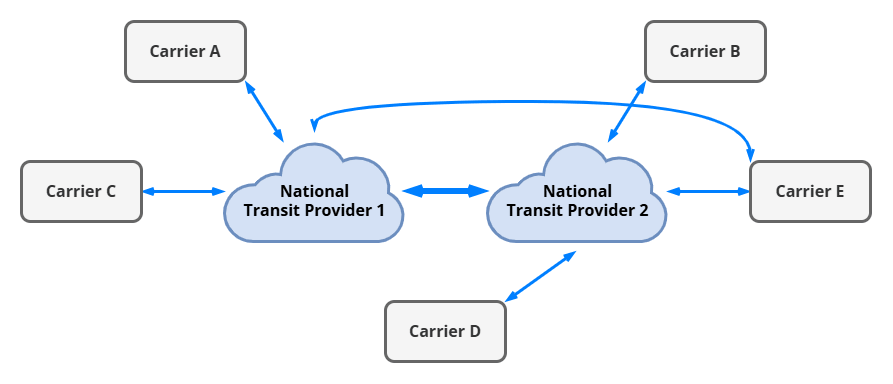
Figure 3. NTP Routes Calls Through National Transit Providers
Figure 3 illustrates how National Transit Providers (NTPs) would be connected. Each Carrier could connect to one or more of those providers. IP calls could flow through the National Transit Providers. The NTP idea can be combined with ALIII.
The Pros of NTP
Speed. We could probably get NTP going relatively quickly, because companies like Bandwidth and Inteliquent already operate a lot of the components that would be necessary. They already have a lot of relationships, at least contractually and in some cases technically, to make this work.
Clear Accountability. One of the big advantages of the NTP proposal is that it says who’s responsible. Suppose carrier A sends a call to the nationwide transit provider it has chosen for this call, and there’s a problem. We know whose responsibility it is: the transit provider is charging a fee to make that call deliver properly, so we know whose job that is. That answers real accountability questions.
Immediate Flexibility. NTPs can also provide flexibility to accommodate legacy technology. Example: Suppose a Carrier has equipment that cannot support the latest TLS encryption standards, but they can provide a secure Ethernet link to the NTP; this NTP may be able to build a secure all-IP connection to the service provider voice network that the Carrier could not.
The Cons of NTP
Monopoly Risks of a Singular NTP. Inteliquent has stepped back from its initial proposal envisioning exclusivity—a single regulated, monopoly NTP, and with good reason. The problem with declaring a single NTP as exclusive policy is that it doesn’t match the general tenor of deregulation, and it may well put the FCC in a rate-setting role it really does not want. NTP as a long-term, permanent option might require not only regulator-set rates but might also invite arbitrage—creating situations where traffic pumping might happen again. Recall the free conference-calling systems that pumped calls into Iowa simply because a phone company in Iowa had the right to charge extremely high rates. Another reason to think NTP is not a long-term, permanent, final answer is that it could only be made so by a regulatory mandate, as opposed to market choice.
Rate Setting. Even with multiple NTPs, one of the big question marks of the NTP concept is the rate-setting question. Inteliquent’s original proposal was to have the FCC set rates—but that has drawn substantial resistance. Almost nobody wants the FCC to set rates. If the FCC were to set rates for IP voice traffic, how exactly would we set the right rates—that is, the per-minute charge between a carrier and the national transit provider to deliver the traffic? An alternative would be declared rates—providers publish them, and they then stand open for oversight.
For nationwide transit providers to work without FCC rate-setting, we need to look at the way the transit business runs today. Consider Sinch: Neutral Tandem’s entire story—the company that became Inteliquent and is now part of Sinch—is unregulated, contract-based, competitive transit against ILEC tandems. Rate regulation enters the NTP proposal only because of the monopoly mandate. If all 1,900+ voice operators must connect to the NTP, and there is only one NTP, then the NTP acquires bottleneck power over the captives, and it becomes a mandated-use monopoly.
If we assume there are multiple NTP options, another challenge is who decides which NTP—Interconnection Provider—carries a given call. Competition between two or more NTPs disciplines pricing only if the party paying for the transit is also the party choosing the provider. If one organization chooses the NTP path and another one pays, this creates a monopoly problem that returns through the side door. So if there are multiple NTPs, the organization paying for the call should also be the one that chooses which NTP to use for termination.
We should drop the mandate and say NTP is one way to get there: if you’re getting your traffic to the endpoints over IP, you could use ALIII, or you could use NTP, or you could use private interconnections.
The Advantages of ALIII Combined with NTP
The NTP idea and ALIII could work hand-in-hand. Neither requires an exclusive mandate that forbids the other. You can have both—they compose naturally with each other. ALIII’s AVSP model was written so that intermediaries are first-class participants: a nationwide transit provider is really a large ALIII aggregator holding AVSP certificates and publishing FQDNs on behalf of the carriers it serves. Suppose carrier A someday connects directly to all the rest of the world over ALIII—but carriers B and C want to continue using their nationwide transit provider. With ALIII, the transit provider would just advertise that traffic to B and to C can reach them through it—which is exactly how BGP advertisement works today. It’s taking similar route-advertisement logic and moving it into telephone call routing.
ALIII and NTP Combined
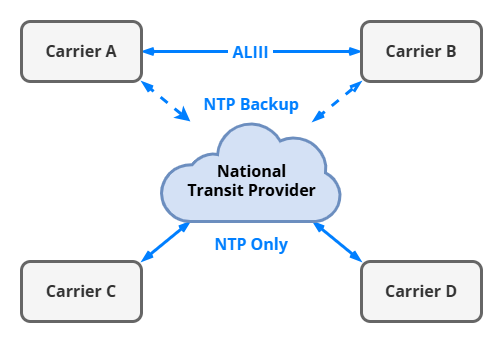
Figure 4. ALIII and NTP Can Work Together
Figure 4 shows how the NTP concept and ALIII can coexist happily. In this example, Carrier C and Carrier D only use an NTP for their interconnection, while Carrier A and Carrier B use ALIII as their primary interconnection, with NTP as a backup routing plan.
Both can also run at the same time. A nationwide transit provider could exist today, and then, as ALIII is added, a carrier can monitor call quality: when calls to a given SBC fail, stop using that link and shift the traffic to the NTP. You could use the transit provider as your preferred route, or maybe as a backup route, depending on your strategy. Perhaps the nationwide transit providers carry the transition for the next few years while ALIII matures, SBCs are upgraded, and operators build experience. They’re very compatible with each other.
Once ALIII is up and running, it becomes a genuine alternative, and it protects against a nationwide transit provider drifting into a monopoly position. A carrier is always free to send traffic directly.
What we want to aim at is results: that traffic can be sent end to end between all U.S. telephone paths, so that we can have end-to-end connectivity for codecs and for STIR/SHAKEN and related headers. Both paths would keep the call IP end-to-end—the precondition for branded calling surviving the whole call path, and for a range of consumer protection efforts. A nationwide transit provider that signs and passes identity headers is strictly better than a TDM tandem that strips them.
IP Transition Timeline
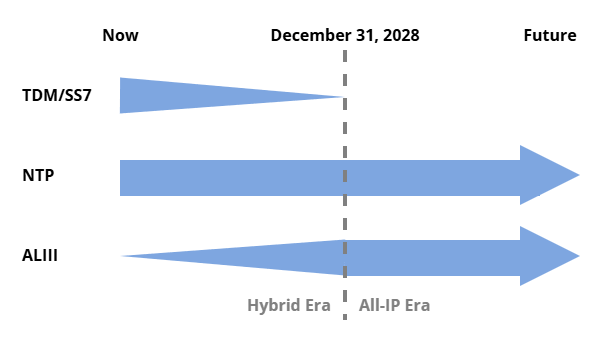
Figure 5. Anticipated Evolution of Market Acceptance and Usage of Routing Options
Figure 5 illustrates the possible trends in market acceptance and usage of TDM, NTP, and ALIII over time. Many believe the market could bring NTPs into operation relatively soon because they are so technically similar to existing wholesale commercial networks, while ALIII continues to progress.
Could ALIII Become the Mandated Standard?
One path is a de facto mandate. If the FCC forbears some of the obligations for TDM and colocation interconnection and finishes some of the Section 214 discontinuance streamlining so TDM can naturally be turned off—if it adopts the USTelecom proposal—then it could declare that ALIII constitutes compliance with the Section 251(a) duties to interconnect. (USTelecom has advocated for relaxing FCC regulatory exit barriers under Section 214, allowing carriers to retire copper and TDM networks without protracted procedural delays.) If the FCC says ALIII is sufficient—implement ALIII, and you have satisfied your interconnection duty—then that becomes the de facto way of doing it.
If new authority is needed, that path exists as well. The FCC already has some regulatory authority that it could use to change some of the rules. It would be better, though—especially in light of Loper Bright and the major questions doctrine—to have Congress direct the FCC to require standardized IP interconnection and to bless the governance-authority structure. That is what the TRACED Act did for STIR/SHAKEN: Congress wrote a law that said what the STI-GA needs to be.
ALIII and NTP Comparison
| Key Element | ALIII | NTP |
|---|---|---|
| Network transport | Public internet, IPv6 | Private IP links in each state |
| Security rules | One defined ALIII standard, TLS/SRTP | Each NTP operator can choose |
| Call routing | LERG/LNP discovery service and DNS | Default route or manual configuration |
| Troubleshooting responsibility | Calling and called parties | Each NTP is responsible for its own network |
| Who pays for the middle | No transit charge | Originator |
| Bad-actor cutoff | Revoke AVSP certificate | Each NTP disconnects bad actors |
| New machinery required | Technical standard, CA, AVSP, call routing | Point-of-Interconnection buildout; inter-NTP peering |
Table 1. Key Element Comparison of ALIII and NTP
The Cost of Not Deciding
It would help considerably if Congress clarified that using the internet is an allowed option, because we need the FCC to have bright-line authority in the post-Loper Bright world.
If nothing is decided, systems will continue to rust. Fraud will continue to advance. Fraudsters will find new ways to exploit the limitations of the current system. Private IP interconnection will continue to grow on a painful, piecewise basis. Enormous sums will be wasted maintaining an inefficient legacy architecture.
I expect and hope that we’ll have a future that involves both ALIII and operating nationwide transit providers providing a valuable service, either as an intermediary or, in some scenarios, a gateway function, alongside private IP interconnection.
Indecision itself carries cost and risk for everyone. Both Congress and the FCC can take steps that will help. Business and technical leaders will need to watch the space closely and begin to move their own networks to all-IP—both by finding ALIII-capable equipment and software updates, and by integrating with nationwide transit providers as they become available. A network that makes deception cheap and honesty expensive is a moral failure as much as an engineering one. Finishing this transition is, among other things, an act of stewardship.
Frequently asked questions
Here are answers to frequently asked questions about the future of the U.S. service provider voice network and the implications of adopting either the ALIII approach, the NTP approach, or both, to accelerate the IP transition.
What do the “ALIII” and “NTP” acronyms stand for?
- ALIII stands for Agreement-Less IP Interconnection over the Internet.
- NTP stands for National Transit Provider.
Why have ALIII and NTP become hot topics?
The U.S. service provider voice network is a hybrid system. Some portions use the older non-IP TDM/SS7 network technology, which does not support new things like STIR/SHAKEN call authentication and branded calling. The pricing for TDM interconnections has been going up dramatically.
The transition from this hybrid system to an all-IP network would be highly beneficial, but it’s been progressing very slowly. ALIII and NTP have been promoted as ways to accelerate the IP transition.
What are the pros and cons of ALIII versus NTP?
ALIII
- Pro: With ALIII, one single shared agreement and technical standard, which each carrier enters into by becoming an Approved Voice Service Provider (AVSP), replaces the need to negotiate bilateral agreements and technical specifications to exchange traffic with every other carrier.
- Cons: ALIII will require time to establish the technical standard, set up the certification governance and administrative organizations, and establish a call routing service. Carriers may have concerns over the service quality risks of sending calls over the public internet.
NTP
- Pro: National Transit Providers already exist, so the NTP framework could be launched quickly using existing NTPs, agreements, and technical methods.
- Con: NTP presents a risk of market oligopoly control over the service provider voice network. Such market power raises concerns over rate setting and oligopoly pricing.
Which approach, ALIII or NTP, is likely to prevail?
There’s nothing to prevent both ALIII and NTP from coexisting in the marketplace.
- NTP can provide solutions for many carriers in a short period of time and with little work required.
- ALIII can provide a check on the NTP approach drifting toward oligopoly pricing power.
- Some carriers might choose to use both ALIII and NTP, perhaps with one as the fallback for the other.

TransNexus solutions
TransNexus is a leader in developing innovative software to manage and protect telecommunications networks worldwide. The company has over 25 years of experience in providing telecom software solutions, including toll fraud prevention, robocall mitigation and prevention, CDR and call analytics, advanced call routing, billing support, STIR/SHAKEN, and branded calling.
Contact us today to learn more.
Branded Calling ID™ enables voice service providers to generate revenue from branded calls they originate or terminate.
Learn more about Branded Calling ID